The Water Channels
The acequias are the oldest machinery on the hill — how the water climbs, where it sings, and what a gardener learns from listening.
Ask any gardener on the hill what the place is really built of and he will not say stone. He will say water. The whole complex is a machine for moving water uphill — a royal diversion of the river, a channel cut along the contour of the mountain, and then a thousand smaller veins that carry it through the gardens, under the floors of the palaces and out again to feed the orchards below. The Moors built it; we merely keep it.
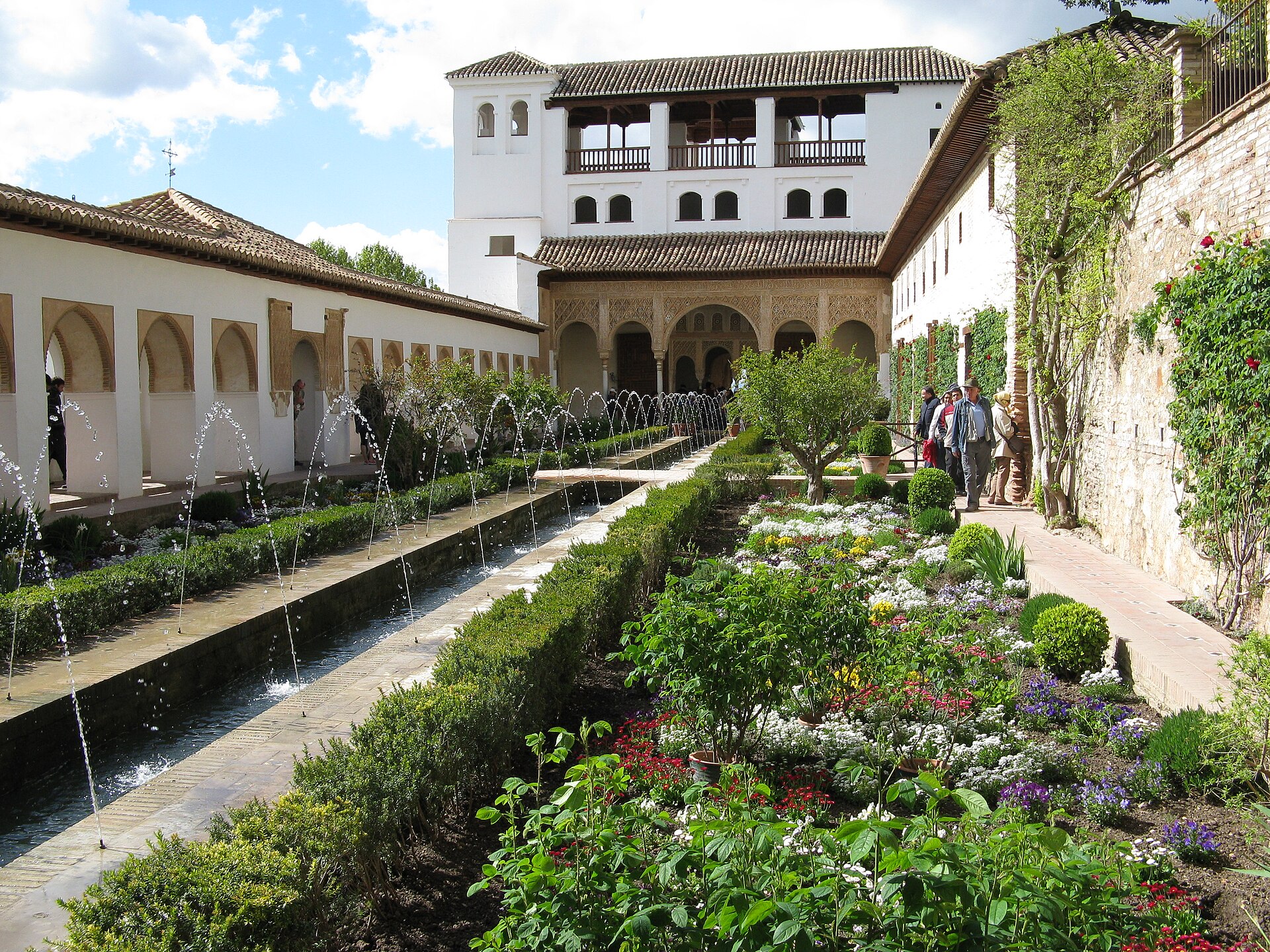
The main channel — the acequia real, the royal channel — takes water from the river kilometres upstream and delivers it to the hill by nothing but patience and gradient. No pumps, no engines, only a slope so gentle you cannot see it and so exact that six hundred years later the water still arrives. From there it splits into the channels you see in the courtyards, the hidden pipes under the paths, and the fountains that the tourists photograph and the gardeners clean.
My job, part of it, was the channels themselves. Leaves fall in — you would not believe how many leaves — and a blocked channel does not complain loudly, it just quietly stops feeding the parterre at the far end. We walked the runs every morning with a hoe and a hook, lifting out what the night had dropped, listening for the places where the water sounds wrong. A channel that runs clean makes a particular low murmur; a channel with trouble gurgles. You learn it in your first month and you never unhear it.
The cleverness of the system is quiet too. The same water that cools the courtyard air is the water that feeds the myrtle hedges is the water that runs the fountain is the water that leaves through the orchards — nothing wasted, everything in order, gravity doing all the labour. Modern engineers who come to study it always end up shaking their heads and smiling the same way.
If you visit, stand still by one of the long courtyard channels and listen. The sound the water makes there is the same sound it made when the sultans walked — the oldest continuous sound in the place, older than most of the stones. We gardeners used to say the hill does not have plumbing; it has a heartbeat.
A last detail for those who like numbers in their beauty. The drop from the river intake to the hill is engineered to something like a one per cent grade — precise enough that the water flows briskly but does not erode its own bed, gentle enough that it arrives without violence. The men who set that grade had levels made of water and rope and eyes trained over a lifetime; they had no lasers and no drawings worth the name. When modern surveyors finally measured it, the instruments mostly confirmed what the water already knew: it works. It has worked through wars, neglect, reconstructions and my own thirty years of pulling leaves out of it, and it will work long after both of us are done.